Showing posts with label movement. Show all posts

Monday, 30 May 2016

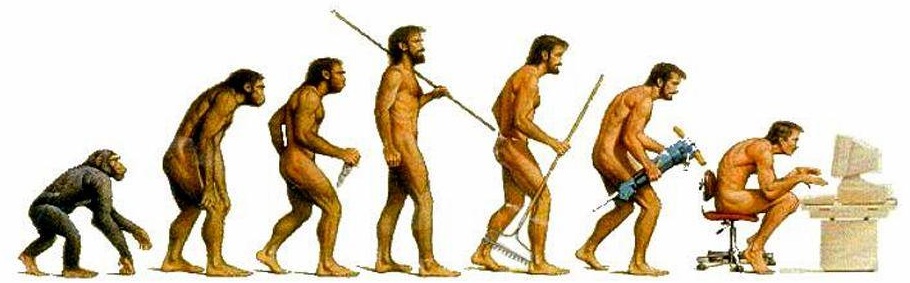
De-Evolution - What can we learn from children?


In this post I want to look at the idea of "De-Evolution."


If you're not sure what I mean, here's the basic idea:

We were designed to move. Our bodies have a number of cleverly designed joints to allow for a whole spectrum of movements through their various shapes and forms (think about how different an elbow joint/hinge joint is to a shoulder/ball and socket design).


However, as children's activities revolve less around a ball in the street and climbing trees and instead  more around a computer screen; and adults work longer hours than ever and spend more and more time in other stagnant, often seated tasks (driving to and from work, working at a desk, sitting in front of the TV because you're so tired from all the sitting and working and sitting and driving) this ability to move fluidly and freely is regressing to a more fixed, less supple version of yourself.


While this is true, many people will argue "children are always so supple; we need to move more as they do in order to stay supple. Look at a baby, look how they can squat and sit in a deep squat position easily. We should all still be able to do that." These same people will use this image (or similar) to back up their argument:


While the general thought pattern has some merit ie: we should try to move more in order to maintain our ability to move freely.
There are a few large oversights from those that expect everyone to move in their 40's as they did in their toddler years.


1) Wear and tear:
Inevitably, as the years go on we will pick up more and more knocks, injuries, breaks and strains. Often the body will create alternative ways to move in order to look after these injuries. Think about when you've hurt your ankle or foot you naturally limp without any thought in order to protect your injury. Over the years these injuries and issues may lead to a number of ineffective movements patterns and bad habits for many of us.


2) A quick myth buster:
A new born baby will have around 300 "bones" in comparison to a full grown adult who has around 200 actual bones. Most of the structure of a baby is in fact cartilage based; over time many of these will harden and fix with others so inevitably movement capabilities and suppleness will change.


However... one ethos does still apply to movement...


"use it or lose it"
More and more we lead a stagnant life. From desk based jobs, to endless hours in a car and the ever increasing number of box sets available; there is often a compelling reason to just sit still.


Further still, more and more the pursuit of "convenience" is at the forefront of our consumer mind. We just want to do "whatever's easiest". This is a horrible ethos to live by and one that inevitably leads us to often jump to the easiest option when possible. Whether it's ordering in food, having our food shopping delivered, taking an escalator over just one level or driving to places which are very walkable, we're all guilty of sometimes doing whatever the easiest option is; which is often the least active.


So how should we fix this and what should we aim to do?


Maintain Movement:
Wherever possible, take the option to move more. Make this a conscious choice in your life and this will inevitably allow your body to stay active and more healthy. Walk, don't drive, choose active family activities, carry things when possible, test yourself and elevate your heart rate.


Re-think movement:
I'm not suggesting you jump around the office like a monkey but... you could always jump around a park like a monkey? Or crawl like a bear, or climb, or roll or jump. Try not to restrict the way you think about movement and look around for inspiration. There's plenty of "primal movement" videos on YouTube or perhaps looks closely at animal movements and children at play.


Observing a child:
I'm very fortunate to have a beautiful 2 year old son named Cassius. Cassius (or "Big Cass") is a ball of energy and, thankfully has taken after me in the height/structure department. He's alarmingly strong and seems to have a strange competitive nature which causes him to want to move any heavy objects, large objects or objects that he's seen me move (including kettlebells that weigh more than him, 3-seat-sofas and even me, his 17 stone+ Dad who he thinks he should be able to push aside when he desperately "needs" a toy or snack).

What I've also observed from "Big Cass" is his inherent knowledge of movement, balance and ability to ergonomically overcome obstacles.

For instance, he can (upsettingly) already squat better than I can and sit in a relaxed deep squat for ages while he plays.
He figured out how to climb on to a sofa using his large head for an anchor while climbing with his legs. How to climb up stairs when he smaller despite their relative height to him. Using his bodyweight to lean forward and run faster or lean backwards and counterweight him down hill.


You might not have children of your own so I can't advise that you spend time watching kids and how they move; you and I could both get into trouble for that! Instead, for inspiration have a look at primal movement videos on YouTube or investigate a company called MovNat.


What CAN we learn from the children?
What we learn is that we naturally know the correct way to move and overcome obstacles with our body. What we don't do is use the body as it should be used and more often than not, pick the easiest/laziest way to move rather than the correct way.
When you pick up things from the floor do you always bend at the knees, keep your heels down and keep an upright torso like Big Cass? Didn't think so!


To summarise...
We ALL need to move more and we ALL need to make conscious decisions to do so. Pick the active option and make your body do more. Don't stay stuck at a desk all day, walk at lunchtime, in fact, walk whenever possible. Test your bodies capability (without being ridiculous) and find out what you can and can't (safely) do.
Move more and move freely. Stay away from the restrictions of machines and use your own body as it's designed to move. Whatever your age, whatever your capabilities and whatever your stage of fitness, it's likely that your body can probably do more than you currently do with it.


Don't forget to follow me on Twitter (@MichaelD_PT) and YouTube


Thursday, 1 January 2015

15 Training Tips For Beginners


Start of a new year, all the gyms are going to be full, all the gym-regulars are going to moan about how busy the gym is, how crowded the changing room is, how there's nowhere to park and how someone they don't recognise keeps blocking their down light and mirror spot!
 
BUT... what if you're NOT a gym regular? What if you've never REALLY set a foot inside a gym, followed any structured gym program or been "shown the ropes" by anyone other than that big guy at the gym? Then read on friend:
 
If the gym is a new phenomenon to you, here's how you should start out:
 
1. Learn to move
This is number one for a reason. It's easier to learn something than it is to re-learn something; so get your fundamental movements nailed before you even think about lifting a significant weight. Learn the key "rules" to effective squatting, hinging, lunging, pushing and pulling. Do that and you'll be able to make the most of your gym time in a safe and effective way. You'll also be better than most people in the gym!
 
2. Get professional help
Don't just rely on the biggest guy at the gym for advice. Their experience and years of training will mean their demands and approach to training should be distinctly different to yours. A professional trainer will be able to offer you specific coaching for your needs and teach you all of the fundamentals mentioned above. You don't have to stay with them forever, but invest in yourself and your body and think of them as lessons or tutorials so that you can then make the most of your time in the gym when you go it alone. You wouldn't just buy a car and "figure it out" without driving lessons (and cars are replaceable!); so why would you do that with your body?
 
3. Don't start with machine weights and move on to free weights
Many people see this as the "safer" option. However, what it doesn't do is teach you good movement patterns and good exercise habits in terms of recruiting and engaging relevant muscle groups for stability and control. You may well use some resistance machines but, leave these until the end of the session when you're more fatigued. You don't need enormous weights, but the benefits of free weights will always out-weight resistance machines whatever your end goal.
 
4. Avoid CrossFit
CrossFit might be "cool" but it requires a lot of coordination and athletic prowess to perform it safely and effectively. Don't try and run before you can walk. If you're relatively new to the gym, this isn't for you.
 
5. Don't "get a bit fitter first"
This is a strange one that I've never understood but still hear it a lot. People think "before I go to a gym and get fit and healthy, I'm going to try and get a BIT fit and healthy".!?! Excuse me?.. By this they usually mean that they're going to churn out some running first for a few weeks. If you're after reducing your body fat then running probably isn't the best thing for your out of condition body nor the quickest way to reduce your body fat. For this, read the next point below.
 
6. Combine resistance work and cardiovascular work
If you want to improve your body composition, improve your cardiovascular system and become stronger and more robust with a better metabolic rate then you need cardiovascular work AND resistance work. Whatever your age, gender, aims and abilities this is true to some degree. While the ratio and balance of each will vary, the message will not - don't put all your eggs in one basket.
 
7. Avoid JUST group exercise
More accurately, I'd say avoid group exercise all together. At least initially. in my mind, group exercise is often contradictory as it can't cater for all abilities. Classes are getting tougher and tougher to challenge the regular attendees and numbers are so great, that you can't expect quality 1-2-1 attention and coaching from an instructor. If you're new to the gym it's likely that you won't follow good form (particularly under fatigue) so group exercise may, accidently, cause you more damage than good. Spend some time with a personal trainer and learn the fundamentals (mentioned in point 1) before throwing yourself into high intensity semi-supervised exercise.
 
8. Train your body - Not your ego
This can be a tough thing to do, particularly if you're 16 and trying to impress potential life partners. However, don't chase heavier weights at the peril of your technique. Work within your capabilities and focus more on mastering the movements than setting personal bests every time you enter the gym. Take your time. The great news for you is, if you're new to the gym then gains and improvements will come relatively easy to you compared to others that have exercised already for year. trust me when I say: You'll find you get WAY more benefit from doing something correctly than incorrectly but with a heavier weight.
 
9. Train your entire body
Avoid doing things like an "arms day" and instead focus on the movement in section one. At the early stages of training you won't need such an intense stimulus for growth. If anything, you're likely to cause more discomfort than you're happy with and hamper future sessions (see point 12). Try to include plenty of lower body work too; let your body grow and develop in an even and balanced ratio to speed up results and lessen the likelihood of injuries.
 
10. Give back to your body
Regular exercise is probably a new concept to you. No matter what your age, you need to give a little back and take care of your body. Think of it as fire prevention rather than fire fighting. You don't wait until your car breaks down before you put oil in it and expect it to run. Here's some tips on how you can take care of your body: http://michaeldarren.blogspot.co.uk/2013/08/10-ways-to-take-care-of-your-body.html
 
11. Take your time
Don't expect overnight results. Don't expect to look like the guys and girls in the gym or on the magazine covers just yet; they've probably been training and eating well for years. Be consistent and committed and your results will come,. You will get back exactly what you put in so be honest with yourself.
 
12. Don't over-do it
This is very "un-me" as any of my clients will tell you. However, if you're relatively new to the gym you're in a unique position. This is make or break time and you're in a psychological minefield. Try (as hard as it might be) to not go all guns blazing on week one. Avoid training for 3 hours at a time every day doing every single exercise that you know. The likelihood is, you'll be sore all over, you'll hate the soreness, miss other aspects of your life (like staying in an watching TV all night), you won't see any immediate results and so you'll get disheartened and pack the entire thing in! Trust me - this happens a lot! Instead, set yourself a realistic and sustainable gym programme (limit yourself to an hour) and weekly schedule, stick to it for 4 weeks or so before adding or adjusting it.
 
13. Don't overlook your diet
As the old saying goes: you can't out train a bad diet. You're now going to be putting in a lot of effort with your new exercise regime, make sure you get the most from it by eating foods to enhance your results. Seek professional nutritional guidance but, for now: avoid sugars and processed foods and try to prepare all meals in advance. Don't say "I don't have time." If you have time to watch TV then you have time to prepare your food. Prioritise.
 
14. DO overlook supplements
Supplements are exactly that: a supplement to areas lacking in your diet. They are not the be all and end all, the missing link or the magic pill you "need". Exercise and eat well and you'll be doing enough for now. You may experiment with supplements at a later date but first off, find out how your body reacts to your new diet and exercise regime. Change everything at once and you won't know where the changes are coming from.
 
15. Enjoy yourself
Initially the gym may be a bit of a slog but make sure you look around, educate yourself and ask enough questions to find a way to make the experience enjoyable. Sure, it's hard work but there's plenty of variations you can add to exercise and the equipment you use in order to make it a little more interesting and enjoyable. If you don't enjoy it at all, you probably won't stick to it!
 
To Summarise...
 
Things to focus your attention on:
  • Movement
  • Technique
  • Full body movements
  • Mobility
  • Nutrition
  • Enjoyment
Things NOT to focus on:
  • Competition
  • An entire session of arms
  • Just cardio
  • Just weights
  • Supplements
Don't forget to follow me on Twitter (@MichaelD_PT) and YouTube