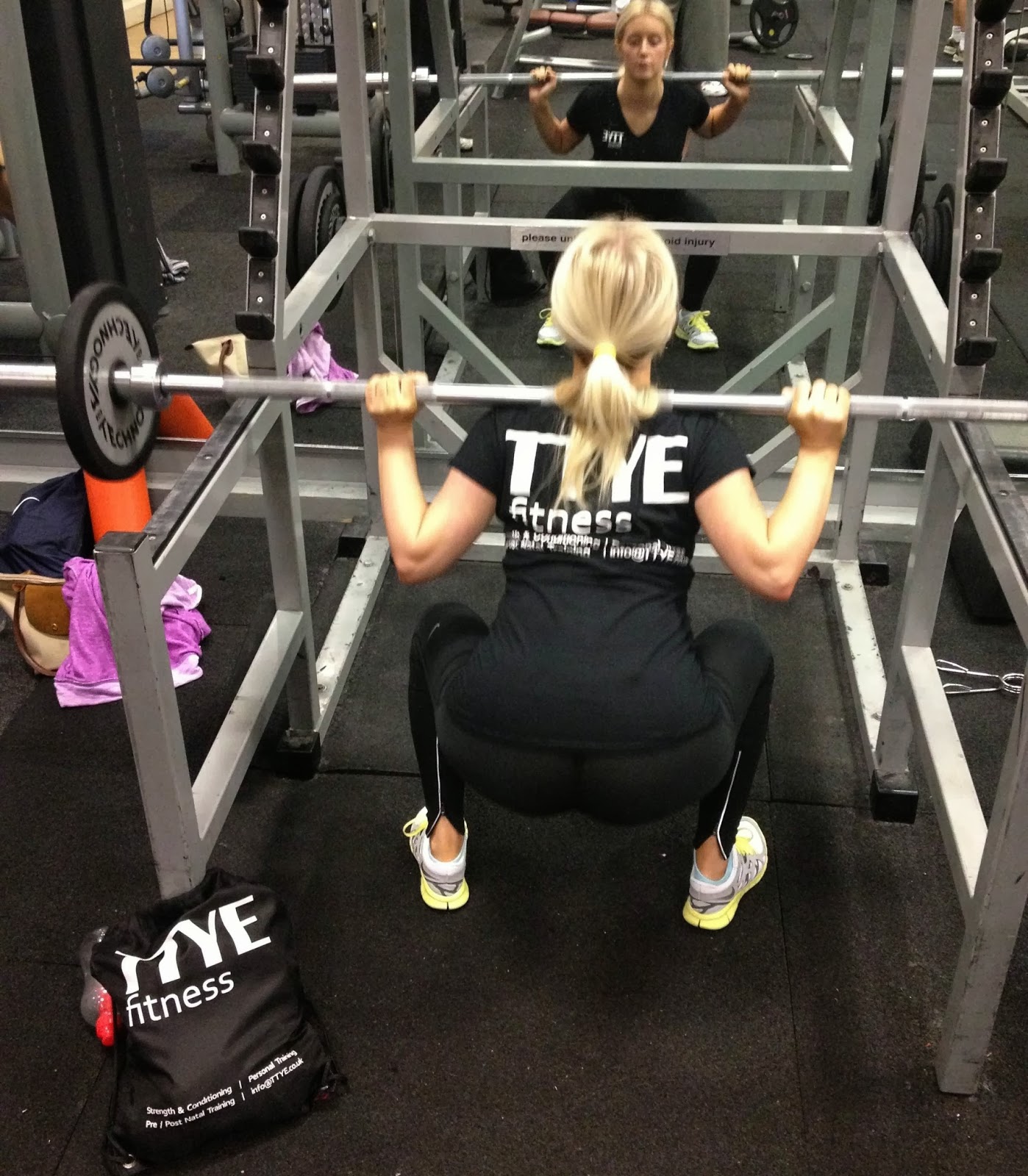
Showing posts with label squats. Show all posts

Saturday, 12 November 2016

15 Things You Can Do With a Kettlebell


Any of my clients and former clients will confirm that I always tend to incorporate some form of kettlebell work into most sessions.

Why?

  1. There are some exercises which are only suitable for kettlebells
  2. Kettlebell variations of traditional gym exercises often add an element of skill to a workout
  3. Some kettlebell exercises and flows can allow your body to move freely unlike many traditional gym exercises

I have my own kettlebells at home and I am one of “those types” that enjoys spending my free time in the garden throwing them around and moving around through a variety of movements. I love kettlebells... there... I said it!

Here are 15 exercises that have helped me fall in love with kettlebells.

NOTE: If you’ve never had any in-person guidance with kettlebells then PLEASE do so. Do NOT use images in magazines (and blogs like this) as enough guidance.


2) Kettlebell Goblet Squats - https://m.youtube.com/watch?v=CmsejEOeMpY

3) Double Kettlebell Push Press - https://m.youtube.com/watch?v=9mKhcUPfKpk

6) Kettlebell Clean and Press - https://m.youtube.com/watch?v=0JVD6dnJmvA

7) Single Kettlebell Front Squat - https://m.youtube.com/watch?v=EL0948ij6W8

8) Kettlebell Reverse Lunge - https://m.youtube.com/watch?v=YJNs4FLZnn8

9) Kettlebell Sumo Squat and High Pull - https://m.youtube.com/watch?v=qLiKlFTP3lU

10) Kettlebell Windmill - https://m.youtube.com/watch?v=ITSmgn_BQgY

14) Kettlebell Suitcase Deadlift - https://m.youtube.com/watch?v=diw6YTHt5LU


Or.. one of my favourite things to do (especially if you're short on time or doing a quick home workout) is a Kettlebell flow / complex like this: 
Click Here


They’re fun, different and challenging. If you DON’T use kettlebells on a weekly basis then you’re missing out!

Don’t forget to follow me on Twitter (@MichaelD_PT) and YouTube

Wednesday, 5 February 2014

Reasons to Continue Training During Pregnancy


For those of you that know me personally, my girlfriend is heavily pregnant and about to pop. In a little over a week I'll be joined by a Mini-Big Mike or a Mini-Tiny T.
 
Trina (my girlfriend) has trained throughout her pregnancy under my guidance and has been able to workout regularly, adapting the workouts to her current trimester, size and current state based on her hormones, sleep and general feeling.
 
There’s often a lack of clarity when it comes to exercising during pregnancy. Information can be out-dated and at times, conflicting. What we now know is that often, exercising during pregnancy can be advisable. While you should always seek a professional clearance from a medical professional before exercising, the majority of mums-to-be will benefit hugely from exercising during the build up to child birth.
 
Having qualified as a pre/post natal trainer, I was able to offer specific guidelines and advice to Trina and also watch first hand as she changed and adapt her programmes accordingly. She's still deadlifting, squatting, swinging kettlebells, interval training and also attending pregnancy Yoga. She's had energy most days, feels fit and strong and hasn't had any kind of hip or back discomfort throughout.
 

We both think her continued exercise has helped in a number of ways - something that many pregnant women will miss out on if they avoid exercise. Here's just some of the ways that exercising during pregnancy can be really beneficial...


Be fit and Strong for giving birth
Lets face it - giving birth can be a long and tiring ordeal; a variety of suitable yet challenging cardiovascular and resistance work can be a very good way to prepare yourself for the task ahead. If you can control your body and are very aware of how to contract and/or relax relevant muscle groups then you’re much less likely to waste energy during pregnancy. There’s some evidence to suggest that exercising during pregnancy allows a mum-to-be to significantly reduce labour time. It makes perfect sense: You wouldn't try to enter a marathon without training; so why do so many mums attempt what's likely to be a 12-hour or so physical ordeal without any relative strength or fitness? Very confusing.

Faster road to recovery
For anyone that has exercised regularly and then taken a holiday, they will understand the discomfort that exercise causes after just a short break. Imagine the discomfort and loss of physical capability if you take a full 9 months off (plus recovery)! Your road to re-building your former body and athletic capabilities will be a much smoother and shorter journey if you continue to exercise throughout the entirety of your pregnancy. Muscles will be in better condition and your metabolic rate will be much less damaged than if you lose lean muscle through avoiding resistance work during pregnancy.

Functional Strength for when baby arrives

Your life will change significantly in terms of day-to-day tasks once you give birth. Lifting, carrying, holding and moving this new bundle of joy doesn’t come easy. Gaining suitable, functional strength during your pregnancy can help to prepare you for the new tasks at hand.


Avoid Postural issues caused by your changing body shape
As your baby grows a huge strain begins to be placed on your spine and hips. This paired with increasing levels of relaxin (a hormone released during pregnancy that makes your joint less stable) and many women will experience spine discomfort and, often, more serious spine and hip issues. Improving your core strength and practicing maintaining correct spine alignment can significantly reduce the chances of complicated spine problems and lengthy rehab. Without strong core muscles, glutes and hip strength, the likelihood that you'll end up on crutches during pregnancy when your unsupported pelvis packs in is significantly higher. Symphysis Pubis Dysfunction is far more common than you'd imagine. You'll find plenty of painful horror stories if you Google it.

Get comfortable with your quickly adjusting body shape
Pregnancy is likely to be the fastest you have ever gained such a significant amount of weight. Your centre of gravity will slowly move forwards and therefore, it can be feel very difficult and uncomfortable to move your new-sized body confidently and safely. Instead, unless encouraged otherwise, a heavily pregnant lady is likely to create their own, convenient and alternative ways of moving and carrying out previously simple tasks like sitting and getting out of a chair. Exercise can be a great way to be more familiar with how your body is changing and adapt your movements to suit your size and capabilities while becoming strong through various movements with your new found size.

Have some “me time”

Everyone is likely to be talking nothing but babies once you become more noticeably pregnant. Why not get some “me time”? Escape the constant tending, fussing and questions; let of some steam and feel happier and more confident throughout pregnancy. Add some endorphins to all of those other new hormones floating around in your body.


Energy
Becoming heavier whilst having something share your daily nutrients can be an extremely tiring process. Even relatively simple tasks can appear overwhelming and it can be easy to get into a pregnancy slump; comfort eating and avoiding most things at the thought of how much effort they'll take. Exercise can be a great way to boost endorphins and raise your general energy levels. It will also leave you knowing your own strength and feeling more confident to take on daily tasks as you continue to grow.

IMPORTANT:
As I said at the start this is general advise for the majority of pregnant ladies. Before exercising during pregnancy you should always seek approval from your GP. There are a number of contraindications to training and pregnant ladies with things such as high blood pressure, weight issues, previous birth complications (to name a few) should not exercise to a high intensity during pregnancy.

It's also important to note that benefits may vary as every pregnancy is very much an individual experience. Variations may also occur depending on the current activity level of the mum-to-be pre-pregnancy.
 
For guidelines on “What to expect when you’re expecting” in terms of weight changes, hormonal changes and necessary adjustments to session intensity see my article: "What to expect when you're expecting"

Don’t forget to follow me on Twitter - @MichaelD_PT and YouTube

Thursday, 31 October 2013

Retro Bodybuilding Myths


As we get more and more information thrust upon us each day, it's easy to understand why some people take on bad advice and include it in their training.

However, there are some old fashion, retro "body builder" tips that, for no great reason, have hung around and still show their ugly face in many gyms across the world. "BroScience" to many of you is more apparent than ever.

Just because a big lad at the gym gave you a tip, don't take it as gospel. here's a few to look out for.

Bench Press with your feet in the air to isolate the chest...
There are some people that like to perform chest press with their feet on the bench, or worse still, feet in the air. The idea being that it "isolates the chest". Remember, just because something is harder, doesn't make it better. Performing squats balanced on a swiss ball is tough but not the best way of working your legs.
Ultimately, if you want to improve your chest and your pressing ability you want to be stimulating growth and adaptation. The best way to do that is through some form of overload via increased weight or repetitions or time under tension; if you want to do that then you're best to keep your feet planted firmly on the floor. You're not a balancing act after all.

Heavier squats are more important than deeper squats...
You'll see many people looking to squat the heaviest weight they can waddle out of a squat rack at the cost of sacrificing squat depth and at times, much squat form all together. In order to recruit the highest amount of muscle fires and stimulate growth from a squat depth is key. Work on proper depth under proper control and maintaining good form throughout - the weight increases will soon follow.

Always wear a weights belt for the heavier sets...
Many people still opt for a weights belt as they reach their upper limit for lifting weights. They looked shocked at you when you ask why their using a belt as if you wouldn't imagine lifting a heavy weight without a belt. Personally, I wouldn't ever advise a non-competitive lifter to use a belt. Instead, focus on strengthening all areas of your body equally to take the load and strains placed on it. Relying on a training assistance of any kind is never a good idea.

Walk for extended periods for fat loss...
Long bouts of steady-state cardio (usually treadmill walking) has been a staple exercise for body builders looking to shift body fay and retain muscle for many years. However, what many people ignore is the benefits of sprint work in reducing body fat and improving sporting performance. Sprint work is tough, but short bouts of interval sprint work are an incredibly effective way to shift body fat and boost your metabolic rate. It's a much more time-effective and less tedious option in my opinion. If like me, you're not a huge running fan, intervals of rowing, cycling and even crawling might be a viable option.

Wear a sweat suit to burn more fat...
Sweat suits like you sometimes see a boxer in are designed for one purpose only: to reduce your immediate weight. Not your body fat, just your weight. All that it may do is increase the rate at which you lose water. If you're under pressure to reach a specific weight in time for a pre-fight weigh-in then sure, a sweat suit might be a viable (though not ideal) option. Otherwise, be warned that any fast loss in weight is merely water weight that will return once you take on water again. Rather than a positive, in fact these suits are likely to have a negative impact on your training and results. A loss in water will cause dehydration. Dehydration will reduce your performance and rate you can work at and so, reduce your potential effort so burn less calories and lift less weight. It will also hamper your bodily functions which are heavily reliant on water.

Arms days are essential...
Don't be lured into thinking that you need to put aside an hour a week just to build your arms. Most of you will have other time constraints such as work, family and friends; so why not spend your valuable gym time a little more effectively? Sure, the odd bit of isolation work will target your arms specifically, but consider the benefit of fully body, multi-joint compound exercises like squats and deadlifts if you're looking to improve strength and general body composition. If your under-sized biceps are keeping you awake at night then opt for lots of narrow grip pulling work when working your back. This will not only target your back but also require a lot of forearm and bicep effort. Bigger back and better arms in one go.

More cardio to reduce body fat and get fitter...
It's often the view that if you want to "get fit" then running is the first option. Or, if you need to lose weight, it's cardio again. "Cardio" training is designed to improve the strength and capabilities of your heart and lungs by elevating the heart rate. This can be achieved in many more ways than just running. Heavy lifting or high intensity resistance work are all viable options. Just because you need to reduce your body fat, don't instantly opt for the treadmill. Build lean muscle and improve your everyday metabolic rate while also burning calories in the gym through high intensity resistance work. This is much more likely to avoid you spending a long time in a catabolic state (muscle wastage) and so, will help to retain the muscle mass you've worked hard to gain. if you want some ides for high intensity interval workouts I've written up plenty here: http://www.michaeldarren.blogspot.co.uk/p/workouts-that-ive-enjoyed.html

Carbs in the evening will make you fat...
Ever heard "no carbs after 8pm"? This can work... but usually as it stops people from eating anything after 8 and so, reducing their calorie count every day. Where they might usually opt for late night eating, if you cut that out of your life then yeah, you probably will make a difference. However, it's not that carbohydrates that were the villain in this whole lifestyle adjustment.

Conclusion...
Most of these ideas and tips will have an element of truth or, at one stage, were a current and up to date method of training. However, they're now out-dated and sports science has allowed us to find more beneficial and effective way to stimulate adaptation in the body. Don't be surprised when you still see the above happening in a  gym... just don't join them!

Don't forget to follow me on Twitter - @MichaelD_PT and subscribe to my YouTube channel

Friday, 27 September 2013

10 Coaching Cues I Wish I'd Been Given

 
Often when learning a new exercise a good cue, choice of words or something to focus on can be the "eureka!" moment that you need in order to grasp the desired technique. The point when you "get it!"

Every person is different, some are visual learners, some like to listen to coaching cues and tweaks while others need to be physically put in the correct position first time round; most benefit from a combination of all three.

However, these are 10 things to focus on / cues / top tips when practicing lifts or, ideally, if you're new to specific exercises. It's much easier to learn something than it is to re-learn something.

BENCH PRESS
1 - Push Yourself into the Bench: After you have lowered the bar to your chest, instead of focusing on pushing the bar away from you, imagine that you are trying to push yourself into the bench and drive away from the bar. As you press yourself into the bench you will engage your lats and also make yourself wider. This gives you a much wider and more stable base to press from while allowing to push with maximal effort.

DEADLIFTS
2 - Deadlift in Socks: Deadlifting in socks has multiple benefits. 1) You're instantly lower to the ground and so you don't need to lift as far (sounds petty but it makes a big difference). 2) It allows you to keep your weight predominantly on your heels and engage your hamstring better while not tipping forwards too far ahead of the bar. 3) It give you 100% recoil from the floor; no power is leaked and dispersed through the cushioning in your shoes. 4) The proprioception in your feet is improved and you are now much more grounded, balanced and stable.

3 - Take the Tension Out of the Bar: Just before starting your deadlift, squeeze your shoulder blades back and take the strain of the bar a little. If you're lifting and you can hear the bar clinking into place as it fills the hole in the plate then you're doing it wrong; it should be a silent lift without plates clinking during the initial pull. This will avoid you having a second pull as you hit resistance. By doing this brace/squeeze of the shoulder blades you will help to keep your spine in place throughout the lift. If you're not quite sure what I mean, check out this quick video: http://www.youtube.com/watch?v=iboVuB-Ig3k 

SQUATS
4 - Screw Your Feet into the Floor: Before squatting, imagine your feet are on two plates. Without moving the position of your toes, screw your feet into the floor (right one clockwise, left anti-clockwise) to create some tension and stability in your hips and improve the knee alignment. Try to keep this tension as you sit into the squat position and it will improve your posture, stability and knee alignment throughout the exercise.

5 - Move Your Hips First, NOT your Knees: A common mistake, particularly among women (that's not sexist - it's factual) when squatting is that the knees ride forwards towards the toes. This is an ineffective movement pattern that will add unnecessary strain to your back and knees and not allow you to lift as heavy or as safely. Most people assume that the first movement for a squat is to bend at the knees.;in fact, in order to engage the hamstrings and glutes correctly and maintain a strong position it's important to tuck your hips  and move your hips backwards first. This will keep the weight on your heels and avoid the knees from riding forwards.
This guy talks you through it: http://www.youtube.com/watch?v=dbxxs1PErLQ

6 - Break the Bar: Being a lower body exercise, many people under estimate the importance of the upper body when squatting. Make sure that you don't relax your hands and rest them on the bar. instead, grip the bar tightly and try to "break the bar" over your shoulders as you squat. Brace/Pull down the most at the bottom of the squat. This will add the required tension in the upper back to keep you more upright and squat with the desired posture.

KETTLEBELL SWINGS
7 - Hinge Don't Squat: A kettlbell swing is a hinge movement, NOT a squat. If you want to swing with more power then hinge more, don't squat lower. The kettlebell should never swing near to your knees, it should only just clear your groin no matter what weight or range you swing with.

8 - Keep the Arm in Contact with the Body for as Long as Possible: During the back swing and the swing try to keep your upper arm and body in contact with one another for as long as possible. It's not an upper body lift so the effort should come from the hip thrust rather than any upper body strength. On the way down you shouldn't sit back and wait for the kettlebell to come down (ESPECIALLY as you swing heavier). This limits your potential power output. Instead, wait for the kettlebell to fall and pass under with you as your arm re-makes contact with the body. Watch this video if you're unsure: http://www.youtube.com/watch?v=0_XjJjLc7NE 

PULL UPS
9 - Push Your Chest Towards the Bar: During all "pull" exercises (pull ups, bent over row, seated row etc) it's important to avoid internal rotation of the shoulder. Instead, exaggerate a good posture by bracing in the lower back and maintaining a natural arch in the lower spine, pushing your chest towards whatever object you're moving as you pull. This is probably easiest with a bent over row or seated pull - try to hit your upper ribs on the bar or handle as you pull.

GENERALLY
10 - Warm Up Specifically and Mobilise Specific Joints and Groups of Muscles: I over-looked the benefits of a specific warm up for a long time. A decent warm up (where you ACTUALLY feel warm) should leave you feeling warm, mobilised and mentally ready for the workout ahead. not only will this help with avoiding injuries but it's also crucial to offer you the mental preparedness for maximal effort. Consistently warming up well and mobilising post workout will also help to improve mobility issues and can improve rehabilitation time from injuries and minimise discomfort from existing injuries or muscular soreness - don't keep skipping this!

Don't forget to follow me on Twitter and YouTube

Tuesday, 18 January 2011

"What's the BEST exercise for...?"


Probably the most common question I get asked is,
"What's the BEST exercise for 'X'....?"
Let me just clarify, I HATE this question. If there was a "best" exercise for each body part, gyms would have  multiples of 5 or 6 machines and everyone would use them. So in short, there is NO "best exercise".

Another point to clarify, the best way of getting rid of a chubby stomach is NOT crunches (this is suggested by members far too often!)

As I always say, when it comes to exercise, variety is key; so, even if you found an exercise that seems to work really well for you, at some point it will need changing or adjusting.

My dislike of this question aside, you can find below my favourite couple of exercises per body part/area and reasons why.
These would be my pick of the bunch (these will probably come as no surprise to regular gym goers but a second article on alternative exercises will follow):

CHEST...

Bench press: Link Oldy but a goody! There's a reason that most gyms have multiple benches. The same reason that the bench press has been used in competitions and strength training programs for years. It works! One of the best ways to active a large majority of the chest muscle fibres and also gave strength and progression easily.

Variations: Incline/ fat/ decline benches. Hand with. Repetition range.

Dumbbell Flys: Link It's good to include rotation exercises in all programs as well as push/pull exercises. This encourages not only joint mobility and stability, but will also activate other muscle fibres.

Variations: Incline/ flat/ decline benches. Single hand for more of a core workout. Cables or free weights.

BACK...

Pull-ups: Link Body weight exercises are often overlooked but are a great gauge of pound-for-pound strength. Pull-ups have been used in PE lessons and army training for years and are a great way of improving back strength, core stability, arm strength and grip strength. Performed correctly with a slow lowering (eccentric) phase, the chest will also benefit. Don't cut corners and carry them out with a full range of movement.

Variations: Hand grip: overhand(upper back), underhand (lower back). Grip width. Additional weight or assisted.

Bent over row: Link Until I began training people I never realised how technical and potentially dangerous this move can be. try performing it side on in a mirror, keep an eye on the technique and make sure you don't gradually stand up.

Variations: Wide grip/narrow grip. Overhand/underhand
LEGS...

Squats: Link Master these and the wheels will follow. Squats are very traditional and again used in strength competitions as they demonstrate true leg strength. Everyone should squat (that's aimed at me too!) Other than lunges, there aren't many exercises that will give you a full leg workout in such a functional fashion. Oh.. I've given away exercise 2...

Variation: Half squats. Sumo squats. Jump squats (advanced). Box/ sit down squats

Lunges: Link These can sometimes get a look as they have an 80's retro gym kudos at times and are often thrown into many people's comedy dance routines. However, lunges are great for improving leg strength and also offer emphasis on joint stability and core strength.

Variations: Walking. Dynamic. Elevated. Multi directional

NB: When it comes to legs, try to avoid quad extensions and leg curls machines at all costs. An 80's design that's not functional and frankly, not safe!

SHOULDERS...

Military press: Link Standing shoulder press with a barbell is a great way to activate your shoulders and can be performed anywhere so no waiting around for machines necessary.

Variations: Grip width. Half range. Push press

Dumbbell lateral raises: Link A great way to target the deltoids and give men and women what I refer to as the "action man muscle". This will give attractive separation and definition between the shoulder area, chest, bicep and triceps. From one exercise you not have all of these and not just an arm and a body.

Variations: Cables. Single-arm

ABS...

Crunches: LINK Performed correctly there are few exercises that will isolate your upper abs more directly and effectively. It's basic but still being used, and with good reason.

Variations: Additional weight. Timed (holding each crunch for 2-3 seconds)

Straight leg lifts: LINK Lower abs can be hard to isolate and often people with incorrect form will complain about back pain. If you can master these your entire abdominal area will get a work out with a particular emphasis on the lower region. Try to think about not using your legs and just your stomach to avoid working the hip flexors too much.

Variations: Additional weight (med ball). Twists for obliques. Half range/ full range.


SUMMARY...
As I said at the start, there is no "best exercise" and the ultimate solution is variety. However, in my opinion these moves are all great for isolating and working the desired areas.

Don't forget to follow me on Twitter: www.twitter.com/MichaelD_PT

AND.. subscribe to my new YouTube channel (please): http://www.youtube.com/user/BigMikePT

Wednesday, 29 September 2010

Be inspired - set yourself goals and train for a reason


When I first started using a gym it was so that I could become stronger in order to make me a better rugby player.

YES, I wasted probably the first two years of gym visits as I didn't know what I was doing and so I'd dabble with a few machines, copy a big guy at the gym and maybe try something I'd seen in Men's Health or similar.... not good!

BUT... at least I had a reason. This kept me focused, determined and meant I came to the gym each time with something in mind.

This is ESSENTIAL for anyone, though you may not think it, if you're making progress in the gym you probably have an inspiration.

Find yours. Try...

EMOTIONS
Think of your emotions. How does the gym make you feel afterwards? How do you feel when you haven't been to the gym for a while? Was there an event in your life which spurred you to join the gym? Are you training to improve yourself for something which means a lot to you? How does it feel when you've trained hard for a while and someone compliments you? Many of the people I meet train simply to lift their mood. If it's what keeps you coming through the door, go with it!

FUNCTION
What will going to the gym help you do physically? If you're a keen sportsperson then this is much easier to imagine. I want to be faster, stronger, fitter etc.. This will also help you focus your style of training much more easily. Even if you don't have a sport, function is still important. Consider your job, lifestyle and hobbies. How can you focus your gym work to improve them? ie: if you drive for hours and hours it's important to strengthen your core and back in order to avoid postural problems.

HEALTH
A number of people exercise for health reasons. To avoid disease, aid recovery, lengthen life, improve cardiovascular strength and generally feel more awake, agile and youthful. However, training to "feel healthier" can be a difficult goal to gauge success against. Make sure you have some more tangible goals that can be targeted. Look at your recovery time during cardio work or even make sure that you have regular medicals conducted with particular focus on body fat percentage, resting heart rate and blood pressure. I see too many people visiting the gym to improve their health but in fact hardly break a sweat. Walking through the gym door does NOT make you healthier!!!

AESTHETICS
Aesthetics shouldn't be viewed as a dirty word. Looking around my gym, I'd estimate that well over half of the members use the gym as they want to make their bodies look better and nothing else. If that's for you then that's fine, but don't go to the gym so that your body looks "better"; you need to be much more specific! Focus on areas such as, you want bigger legs, or smaller hips or more definition on your arms, whatever it is, be specific. If it helps, use a visual guide to keep you on track. This should take two parts:

1) If you find a picture of someone, anyone, who has a body that you crave, keep it. They can be a celebrity, model or random from a magazine; either way you need some kind of target
2)Keep a photo log of yourself. This will show your progression more clearly than any other method if "looking good" is your goal. It will also show you where you have fallen short and areas to focus on in the future

Remember: What the mind can imagine, the body can achieve.

IN SUMMARY...
There are MANY reasons why a person might join a gym. To get a healthier lifestyle, lose weight, build muscle mass, appear more toned or improve cardiovascular capabilities.

Whatever the reason, make sure you have a S.M.A.R.T goal

S = Specific
M = Measurable
A = Attainable
R = Realistic
T = Timed

If you can follow these guidelines then you'll soon notice an improvement in your focus in the gym, commitment to each session and hand-in-hand with that, your results.

Make a note of your goals, making sure the stick to the S.M.A.R.T guidelines and highlight how and where they fit in. Create a timeline and stick it up somewhere that you'll see it. Without a clear timeline in mind, weeks will pass and session after session will go unnoticed. Work to a timeline and you'll feel like you're in control of where you're going and you will know what you can expect.

Don't forget to follow me on www.twitter.com/MichaelD_PT

Sunday, 8 August 2010

"WOW-WOW" 08/08/10: 1000 reps to make you a better person (or maybe just 800)


I'm forever telling people,
"You don't need any fancy equipment to have a worthwhile training session!"

Personally, I like traditional, old-fashioned, retro, old-school, minimal (call it what you will) training. No flashing lights, unecesary data, over-sized equipment or shiny things.

So.. I created my "10's workout". Here's the format:

- 2x 10Kg dumbells
- 10 exercises
- 10 reps on each
- 10 tmes through

Giving you 100 reps on each exercise and 1000 reps total.

I took a few minutes to scribble down 10 exercises that i could perform alone, in a studio with just me and my dumbells (and a swiss ball).

Here are the exercises that I went with (but not in this order)...

- Chest Press (on swiss ball)
- Squats
- Front raises / lateral raises (5 of each)
- Press ups on the dumbells
- Shoulder press
- Renegade row (5 each arm)
- Bicep curls (5 eacha arm)
- Skull crushers (on the swiss ball)
- Dynamic Lunges (5 on each leg)
- One leg Romanian deadlifts - 5 on each leg (straight leg deadlifts)

With a little peer pressure (thanks Matt), I stuck with it for 8 "laps" giving me 800 reps total. To be honest, I had one eye on the time, but the tiredness of my shoulders was becoming an issue. Looking back, I seriously regret cutting that corner.

This regret was amplified the next day when my friend Matt decided to try it out and pulled out the full 1000. FACT: He is a better man than me!

Review...
Personally, I wouldn't describe this workout as "enjoyable". It was hard work for sure. BUT, gave me a great pump! The veins were working overtime and I got a real sweat on. It wasn't particularly cardio-based but I gradually got more and more tired that day and slept like a trooper. If you try it you'll know exactly what I mean!

It's a very worthwhile workout, there are just a few things to consider.

Issues to consider...
I think the workout could do with a little re-think. The order needs adjusting and I'd chuck out a few of these exercises in exchange for some more core and to give the old shoulders a stretch out or rest.

Still, 40 something minutes that gave me an ace pump and all body workout! Try it, see how long it takes you.

NB: After Matt completed his 1000 we decided that we should try it again in a new format. I WILL join the gang!!.. further blogs, images and videos to follow...