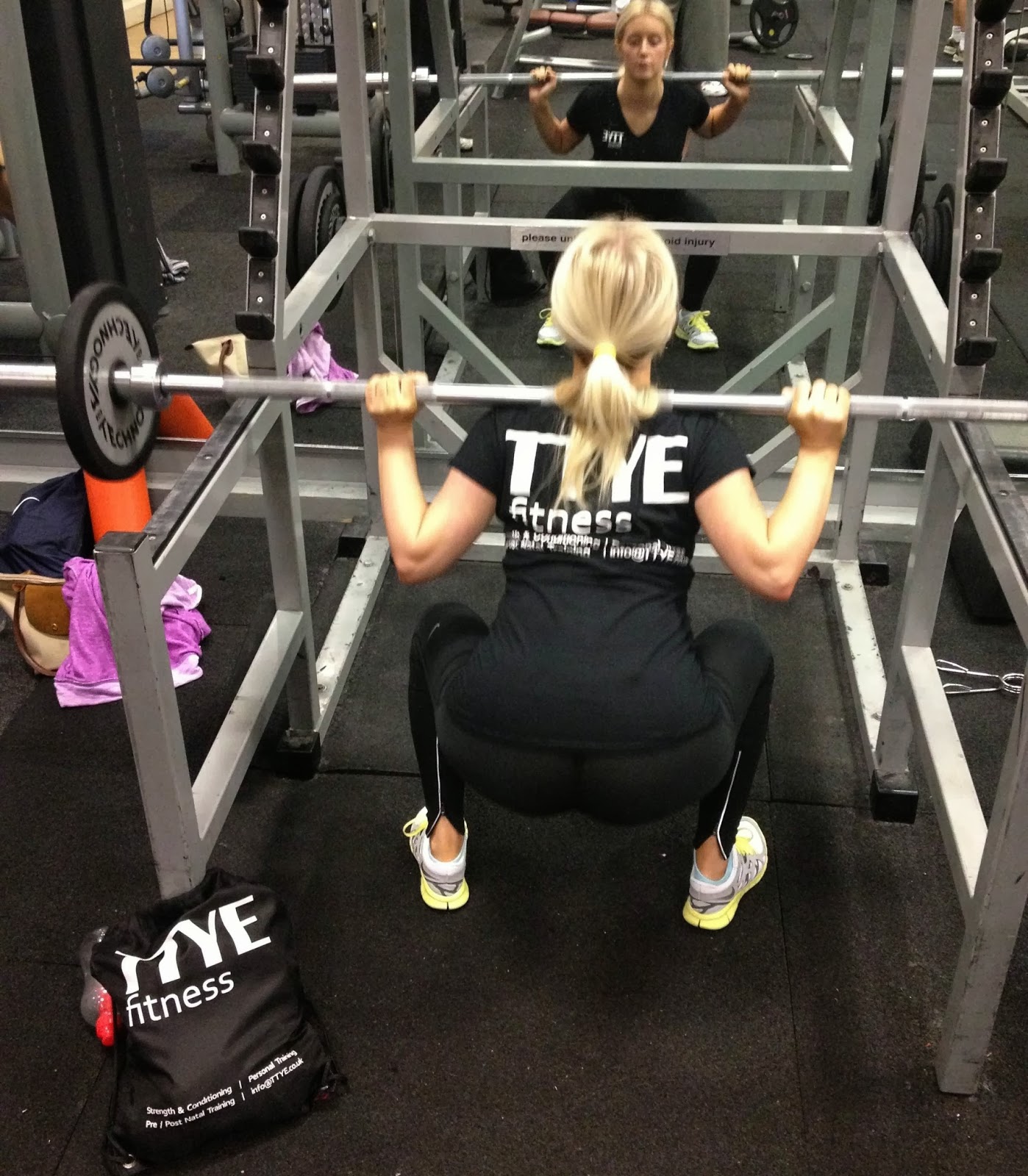
Wednesday, 12 March 2014

What's best workout?... The answer is NOT Zumba, Insanity, PX90, BodyPump or CrossFit...


So I don't think any of the workouts mentioned in the heading are "rubbish!" Nor, do I think there's a legitimate answer to "What's the best workout." However, there seems to be a continued trend among fitness companies to offer "the best workout for your time/money" etc

When I hear people advise others on workouts they've done explaining"It's the best!!" it usually annoys me. The truth is this... activity is BEST and stimulating progress by challenging yourself is BEST.

What does this mean?

I you take "Clare", a 30 something sales person who rarely sits down, goes climbing at the weekends, plays hockey socially and attends the gym 3 times a week where she does predominantly strength training. "Clare" will NOT find Zumba the answer to her desire to cut a little more body fat.

It won't offer her enough stimulus to raise her heart rate or test either her strength or endurance. No matter how much she enjoys it.

Then meet "Jon". He works at a desk, eats whatever he can from the café at work, visits the pub at least 3 times a week for a "few beers" and only works up a sweat when he orders a hot curry. "Jon" tries the Insanity Workout, drops a lot of weight and preaches to his friends: "It's the BEST workout going."

However, the likelihood is, given his starting point, any exercise and activity would have some positive impact on the body composition of "Jon". To add regular, high intensity workouts to his stagnant life along with some dietary considerations and there you have it - success.

Again, Insanity can't be described as "bad". But what "Jon" is Actually benefiting from is the addition of: being more active, being consistent with his exercise and more considerate with his eating.

I would estimate that 90% of people who want to lose weight aren't consistently doing something about it. they may dabble in short-term diets, detoxes and 90-day plans. However, most would benefit from making these things part of their lifestyle:
- More, regular activity
- Changing and adapting exercise regimes to continually challenge and stimulate change
- Eating a balanced and sustainable diet

So in answer to "What's the best workouts" - I always say: "Those that you do frequently". The real answer is: "There is no best". It's all dependant on your start point in terms of fitness and current activity levels, whether your workouts challenge you, offer variety and also challenge you.

Don't fall for the advertisers "Best" - instead, find what's "Best" for you.

Don't forget to follow me on Twitter (@MichaelD_PT) and YouTube

Wednesday, 5 February 2014

Reasons to Continue Training During Pregnancy


For those of you that know me personally, my girlfriend is heavily pregnant and about to pop. In a little over a week I'll be joined by a Mini-Big Mike or a Mini-Tiny T.
 
Trina (my girlfriend) has trained throughout her pregnancy under my guidance and has been able to workout regularly, adapting the workouts to her current trimester, size and current state based on her hormones, sleep and general feeling.
 
There’s often a lack of clarity when it comes to exercising during pregnancy. Information can be out-dated and at times, conflicting. What we now know is that often, exercising during pregnancy can be advisable. While you should always seek a professional clearance from a medical professional before exercising, the majority of mums-to-be will benefit hugely from exercising during the build up to child birth.
 
Having qualified as a pre/post natal trainer, I was able to offer specific guidelines and advice to Trina and also watch first hand as she changed and adapt her programmes accordingly. She's still deadlifting, squatting, swinging kettlebells, interval training and also attending pregnancy Yoga. She's had energy most days, feels fit and strong and hasn't had any kind of hip or back discomfort throughout.
 

We both think her continued exercise has helped in a number of ways - something that many pregnant women will miss out on if they avoid exercise. Here's just some of the ways that exercising during pregnancy can be really beneficial...


Be fit and Strong for giving birth
Lets face it - giving birth can be a long and tiring ordeal; a variety of suitable yet challenging cardiovascular and resistance work can be a very good way to prepare yourself for the task ahead. If you can control your body and are very aware of how to contract and/or relax relevant muscle groups then you’re much less likely to waste energy during pregnancy. There’s some evidence to suggest that exercising during pregnancy allows a mum-to-be to significantly reduce labour time. It makes perfect sense: You wouldn't try to enter a marathon without training; so why do so many mums attempt what's likely to be a 12-hour or so physical ordeal without any relative strength or fitness? Very confusing.

Faster road to recovery
For anyone that has exercised regularly and then taken a holiday, they will understand the discomfort that exercise causes after just a short break. Imagine the discomfort and loss of physical capability if you take a full 9 months off (plus recovery)! Your road to re-building your former body and athletic capabilities will be a much smoother and shorter journey if you continue to exercise throughout the entirety of your pregnancy. Muscles will be in better condition and your metabolic rate will be much less damaged than if you lose lean muscle through avoiding resistance work during pregnancy.

Functional Strength for when baby arrives

Your life will change significantly in terms of day-to-day tasks once you give birth. Lifting, carrying, holding and moving this new bundle of joy doesn’t come easy. Gaining suitable, functional strength during your pregnancy can help to prepare you for the new tasks at hand.


Avoid Postural issues caused by your changing body shape
As your baby grows a huge strain begins to be placed on your spine and hips. This paired with increasing levels of relaxin (a hormone released during pregnancy that makes your joint less stable) and many women will experience spine discomfort and, often, more serious spine and hip issues. Improving your core strength and practicing maintaining correct spine alignment can significantly reduce the chances of complicated spine problems and lengthy rehab. Without strong core muscles, glutes and hip strength, the likelihood that you'll end up on crutches during pregnancy when your unsupported pelvis packs in is significantly higher. Symphysis Pubis Dysfunction is far more common than you'd imagine. You'll find plenty of painful horror stories if you Google it.

Get comfortable with your quickly adjusting body shape
Pregnancy is likely to be the fastest you have ever gained such a significant amount of weight. Your centre of gravity will slowly move forwards and therefore, it can be feel very difficult and uncomfortable to move your new-sized body confidently and safely. Instead, unless encouraged otherwise, a heavily pregnant lady is likely to create their own, convenient and alternative ways of moving and carrying out previously simple tasks like sitting and getting out of a chair. Exercise can be a great way to be more familiar with how your body is changing and adapt your movements to suit your size and capabilities while becoming strong through various movements with your new found size.

Have some “me time”

Everyone is likely to be talking nothing but babies once you become more noticeably pregnant. Why not get some “me time”? Escape the constant tending, fussing and questions; let of some steam and feel happier and more confident throughout pregnancy. Add some endorphins to all of those other new hormones floating around in your body.


Energy
Becoming heavier whilst having something share your daily nutrients can be an extremely tiring process. Even relatively simple tasks can appear overwhelming and it can be easy to get into a pregnancy slump; comfort eating and avoiding most things at the thought of how much effort they'll take. Exercise can be a great way to boost endorphins and raise your general energy levels. It will also leave you knowing your own strength and feeling more confident to take on daily tasks as you continue to grow.

IMPORTANT:
As I said at the start this is general advise for the majority of pregnant ladies. Before exercising during pregnancy you should always seek approval from your GP. There are a number of contraindications to training and pregnant ladies with things such as high blood pressure, weight issues, previous birth complications (to name a few) should not exercise to a high intensity during pregnancy.

It's also important to note that benefits may vary as every pregnancy is very much an individual experience. Variations may also occur depending on the current activity level of the mum-to-be pre-pregnancy.
 
For guidelines on “What to expect when you’re expecting” in terms of weight changes, hormonal changes and necessary adjustments to session intensity see my article: "What to expect when you're expecting"

Don’t forget to follow me on Twitter - @MichaelD_PT and YouTube

Saturday, 18 January 2014

“If you want to make a change, you have to make a change”


Albert Einstein is quoted as saying:
“Insanity: doing the same thing over and over again and expecting different results.”
 
Yet, all these years later, some people are BAFFLED as to why they’re bodies aren’t behaving as they wish it would.

So here are a few easy adjustments that you can make to your dietary and lifestyle habits in order to improve your metabolism, health and general body composition:

-          Take the stairs
It’s an oldy but a goody. Once you do it EVERY time you’ll realise how many steps there are in the world. You’ll burn more calories and improve leg toning. Every little helps!

-          Eat more protein
This isn’t just for the guys in pursuit of big muscles, everyone can benefit from eating high amounts of protein. It improves metabolism, alertness and is a great source of energy. Furthermore it will help with repair and recovery from everyday strains and exercise. Aim for at least 1g protein per kilogram of bodyweight every day

-          Get outside
If you can, exercise outdoors. If not, make sure that you get some time outside everyday – lunch breaks are a great opportunity. Exercising outdoors improves both mental and physical wellbeing. Outdoor exercise has been found to offer greater feelings of revitalisation, increased energy and positive engagement, together with decreases in tension, confusion, anger and depression

-          Be your own transport
Do you always NEED to take the car, bus or train? Why not walk or ride a bike? Get off the train a stop earlier and walk? You’ll burn some extra calories each day, improve lower body toning and feel revitalised and alert when you reach your destination

-          Drink more water
It’s basic but heavily underrated – water is your bread and butter... if that makes sense? The human body is made up of around 70% water, a large majority that needs regular topping up. Water is responsible for regulating metabolism, bodily functions and flushing out unhealthy toxins and waste products

-          Control your food portions
From a young age, many people are told “Finish what’s on your plate”. This is a terrible habit to learn and one that’s tough to break. Be conscious of your food portions and differentiate if you’re eating the food because you need it or because it’s there. Remove some of your food, eat what you have and wait 10-20 minutes before deciding if you need the rest of the food.

-          Don’t eat with emotions
A large number of people eat to improve their emotional state. Comfort eating is present in most of us. Try to replace this tendency with exercise. The rush you get from endorphins released during exercise is much more fulfilling and is also likely to improve your food making decisions post-exercise

-          Snack more often
Don’t be afraid to snack, in fact structure them into your day. Often people will wait until they’re over-hungry before eating. As a result, food choices are often compromised as is the perception of portion control. As a result you eat less clean and healthy food, and more of it

-          Do some resistance work
You may consider yourself a “cardio person” or similar but EVERYONE should perform resistance work each week. Benefits included improved strength, posture, bone density, metabolism and reduces the chance of injury, to name a few.

-          Eat before food shopping
If you eat prior to food shopping you’re much less likely to impulse buy and purchase food based on your current state. Instead you will be clear thinking and able to make healthy, appropriate decisions to fit your lifestyle and diet

-          Leave nothing to chance
When it comes to living a more “healthy” lifestyle, it’s essential you plan meticulously in order to make sure you follow through with your good intentions. Have food prepared, ready and easy to access. Plan gym visit times and exact sessions for each visit. The more difficult you make “being healthy” for yourself, the less likely you are to achieve anything

Don't forget to follow me on Twitter @MichaelD_PT and YouTube 


Wednesday, 11 December 2013

Christmas 2013 - DOUBLE BLOG: 10 Things to Focus On & 10 x Free 10 Min Workouts

 
So it's Christmas season and I'm feeling generous - here's a double blog to take care of you over the Christmas break and make sure you don't go completely off the boil with your health.

First up...

PART ONE: 10 Things to Focus on Over Christmas...


1) Exercise: Obvious right? My advice is just to "Get it done!" Most people will take advantage of the relaxed Christmas schedule and rise a little later than normal. But if their plan is a 10am breakfast of Cadbury's Heroes then it means you'll need to be out of the door at 9am and off exercising. One hour less sleep and you can have your workout for the day complete and be home in time to join in the usual festivities.
DON'T wait until later or plan to get it done "at some point" - it won't happen!

2) Hydration: Don't neglect the simple things. Keep yourself hydrated throughout the day and help your body to ease some of the strains you're putting on it with your week or so of excess. try to link drinks with daily events; for example: Target a pint of cold water within 10 minutes of waking, before you go to bed, and before lunch and dinner - that's 4 every day as a minimum. Add a pint of water every time you're going to leave the house for an extended period to ensure hydration and you're averaging at least 5 pints a day - make that a minimum.
DON'T leave it to chance and realise you haven't had much water today - ESPECIALLY when alcohol levels will be higher for many of you!

3) Turkey: Yep, that's right: "Target The Turkey!" My point being, go big on high protein, lean meats (turkey being one of the best for this)at meal time. It will offer you prolonged energy, aid recovery from exercise (you WILL need to exercise!), keep you fuller for longer and also curb your hunger a little before pudding shows up! Avoid taking your first few bites of any dinner from foods that aren't high in protein such as roast potatoes. If there's lean meat left, DON'T save room for pudding!
DON'T approach your days differently to your working week. have a plan for rough meal times and meal content ahead of each day. Leaving things to chance and eating "whatever's going" won't rub!

4) Sleep: Easiest one! Take advantage of the break from work (if you're fortunate enough to have one) and sleep where possible. Don't fear a day time nap - embrace it. Sleep is one of the easiest and cheapest medicines going; the value of sleep should never be over looked.
DON'T burn the candle at both ends and go back to work after your break, needing a break!

5)R&R: Following on from the sleep suggestion focus on taking care of your body. Spend some time foam rolling and stretching, doing yoga and pilates and generally making sure you feel in top notch for 2014. you might not have this much spare time or flexibility again for a few months.
DON'T waste this opportunity to really let your body recovery and repair ahead of 2014.

6) Fun: Don't take activity seriously all of the time. In fact, be creative and try to exercise elsewhere apart from your usual gym. Some of the workouts listed below don't require any equipment so why not head of to somewhere scenic and workout there for a change?
DON'T just head to the gym and go through the motions

7) Next year: Have a moment of reflection. What did you do with the last 12 months? Where did you start? Where did you finish? Are you in a better place physically than you were 12 months ago? How do you intend to improve again? What is your new "Why"? Get a focus for the year ahead and plan it out with micro plans of 1-3 months that will take you to your end goal stage by stage with no chance of failure.
DON'T just do next year what you did this year - life's too short!

8)Life: If you want to have a successful year ahead in terms of improving your health then it's important to have all other areas of your life in balance such as your work, family and other commitments. More often than not people struggle with results as their health isn't a REAL priority. They may say it is, but they're not willing to manage other areas of their life to MAKE time for exercise and living healthily.
"I didn't have time to go to the gym this week..."
"I was in a rush at lunch so just picked up..."
"I don't have time for breakfast in the morning..."
"I had to drink as it was..."
" I'm going to struggle to make the gym next week. I'm running my kids around..."
"There aren't enough hours in the day!.."
If you say these things, your health is not your priority. You need to plan in the inevitable and figure out solutions when met with barriers.
DON'T "try" to do anything next year... just do it! Plan with accuracy and thoroughness and create a fool proof regime.

9) Alcohol: Don't focus on drinking it; focus on being aware of when you're most likely to drink it. For example, if you're planning your exercise regime for the week then consider social occasions too. Don't plan an early morning sprint session on a day when you'll be recovering from a family gathering where you might drink. Likewise, don't drink "because it's Christmas" - you're not a child; have some self control. Sure, you may drink more than normal but remember, you don't HAVE TO drink! Try saying "no", then wake up the next day and workout - you'll be glad you did it. Just be realistic with your plans and don't instantly let lose on the alcohol.
DON'T see Christmas as a green light for daily drinking!

10) Embracing your surroundings: In my opinion, there is no better time of the year to get outside look around and listen to what's around you. Reflect on the year gone by, think about the year ahead and be grateful for what you have and how fortunate you are. Go for a walk, discover somewhere new, enjoy scenery and spend time absorbing your surroundings. Life can be very go-go-go... stop... be aware!
DON'T sit in all Christmas eating chocolate and watching repeats of Christmas films or playing with your newest toy!

PART TWO: 10 x 10 min workouts...

NB: ALWAYS take time to warm up first though with either a lower intensity of the exercise you're about to do such as tempo runs before sprinting or a mobility flow such as the two on the links below before doing resistance work. The warm up may last only a few minutes but it's necessary to get the most from your 10 minute workout.
Mobility Flow 1: https://www.youtube.com/watch?v=d1cpIOjiVs4
Mobility Flow 2: https://www.youtube.com/watch?v=3cnMTfq_ON4

WORKOUTS: 1) 10 x "1 minute 100's" : Run 100m in 15-17 seconds, turn and immediately jog back to the start in the remainder of the minute (ie: 45 sec jog if the sprint took you 15 secs), try to keep an eye on the time so that you make it back on time. When the second minute starts, turn and sprint again. Do this 10 times - much harder than it sounds.

2) Tabata Push and Core: Set your timer up for Tabata Intervals: 20 secs work, 10 secs rest x 8 (4 mins total). During the 20 second working periods alternate between these exercises:
A1) Push Ups and Tuck (as you perform the push up, during the upwards "push" motion lift one knee and raise it towards the wrist on the opposite side of your body, drop into the nxt push up with both feet on the floor and this time, as you push raise othe other knees under the body and across to the opposite wrist) Similar to exercise 3 here (link) but with push ups in between
A2) Plank and Reach https://www.youtube.com/watch?v=xAzQqEF50PE

B1) Shoulder Press Push Ups (push ups with your feet standing nearer your hands to create an upside down "V" shape with your body. Lower the top of your head towards the floor rather than your chest) Exercise 10 here (Link)
B2) Frogs Exercise 12 here (Link)

3) Short Running intervals: Set your GymBoss or interval timers to sound every 15 seconds. Simply run as fast s you can for 15 seconds, walk for 15 seconds trying to slow your breathing as much as possible in that time. It might be necessary to break this into 2 x 5 minute blocks with a short rest between.

4) Tabata Pull and Core:
A1) Pull Ups or inverted row under a bar or tree or climbing frame A2) Side Plank on your left side
B1) Heavy Deadlift (find something heavy and pick it up with a flat back, heels planted flat and feet either side of the object. be creative: plant pots, logs, old Christmas trees anything "heavy".) B2) Side plank on your right side

5) Broken 1000m Row: Row 100m - Climb off and do 10 x heavy Kettlebell Swings - repeat for 10 rounds

6) Tabata - Legs and Core:
A1) Squats or jump squats (add weight if accessible)
A2) Laying Leg Raises

B1) Alternating Reverse Lunges
B2) Crawl Outs - (Link)  

7)10 x Minutes of 5 x exercises: 1) Push Ups, 2) Squats, 3) Plank 4) Walking Lunges, 5) Burpees - Twice Through with minimal/no rest

8)Tabata - Conditioning
A1) "Up/Downs" or "Suicide Push Ups" (start in a push up position climb down to a plank and then back up again as fast as you can as many times you can without your knees touching the ground) Exercise 21 here: Link
A2) Animal Crawl 2-3m Forwards and Backwards (Link)

B1) "Pop ups" - (Link)  
B2) Mountain Climbers (Link)  

9) Short variation of "Cindy" (it's a Crossfit workout"): 5 x pull ups, 10 x push ups, 5 x bodyweight squats - 10 minutes. Aim to do a round a minute every minute and you'll be doing well.

10) Walk. The easiest option going but if you at least walked every day that's streets better than the majority of the country. Add variety to it though - whether you add in some intervals, hill sprints, bodyweight exercises, combine walking lunges between regular walking, race a friend, take a dog and sprint around with them, whatever you do, just try to be active.

So there you have it - 10 things to focus on and 10 EASY to fit in workouts. You're telling me you can't sacrifice 10 minutes from your day?

You must REALLY want to be fit and healthy! (sarcasm intended!)

PRIZE for anyone that does all of the 10 workouts above and shares evidence of it with me (pictures along the way). I mean it - I'm offering to reward you for putting aside 10 minutes of your day! How easy is THAT!?...

Hope you found this useful. Feel free to share with your friends, family and networks.

Have a lovely break from Christmas... but not from life! Until next year....

Don't forget to follow me on Twitter  @MichaelD_PT and YouTube

Thursday, 21 November 2013

How to improve your workout - the ongoing list


This is fairly straight forward; below is a list of ways to improve your workouts. You may already use some of the suggestions below in some capacity but hopefully, there may be an idea or two that you can incorporate in your current workouts.

I intend to add to the list from time-to-time (hence the title) enjoy...


Use an interval timer to add intensity - I'd recommend a GymBoss (they also have a free app that you can download). You'd be surprised at how you react to a timer and feel accountable and obliged to carry on. Its a great way to save time too and keep your workouts short. Quite a few ideas of how to use one here: Workout Ideas


Train with a training partner with similar goals - Find yourself a friend with similar goals and aims. Pushing yourself with some healthy competition and being accountable for your efforts and attendance is a great way to make your gym sessions consistently high quality.


Train With a Partner (2) - with different goals / skills / knowledge - Find someone that does something COMPLETELY different to you. A different approach to training, a different sport focus or a different background in fitness can be a real eye opener. You don't have to change you entire way of training but approach the session with someone new with an open mind. Take from it what you can and apply it to your own training. It doesn't need to be a weekly event but take from other areas of health and fitness what you can.


Enter a competition - Signing up for a challenge is a great way to instantly set yourself a S.M.A.R.T goals (read about setting S.MA.R.T goals here: S.M.A.R.T goals) It's specific, and time sensitive - a great way to make yourself accountable and stay on track with your training.


Set yourself quarterly goals - Look back. Are you any "better" than you were 6 months ago? For most people the answer is "no". Ask yourself "why" and then set yourself a goal for the next 3 months. Do this regularly and make regular, progressive steps each year.


Set a time limit for each workout - This is a great way to get through a pre-set amount of work and ensure your intensity if sustained. For example, if you planned on doing 3 sets of 4 different exercises why not limit your session to 45 minutes? Aim to do each exercise in under 10 minutes and allow for a brief water drink and setting up of equipment.


Write it down: The Workout - The amount of people that enter a gym with no plan or reasoning for what their about to do is probably a direct reflection of the amount of people that seem to exercise regularly and make little or no progress. Despite what the good people at CrossFit may suggest, you can't just go and pluck random number and exercises for your workouts and expect to make regular progress.


Write it down (2) - Numbers - Again, looking at "are you any better than 6 months ago?" Are you any stronger? have your sessions become progressively more intense, heavier or harder in any way? It can be hard to know a definitive answer without tracking the weights you use. Also, it can be a useful kick up the backside when you look back and realise you haven't made any progress with your deadlifts in 6 months for instance.


Get Help-  There's a phrase that goes something like: "A person who trains themselves has a fool for a athlete" - No Matter who you are, how well educated you are or how many years of experience you have you don't know everything; even those self titled "experts" and "gurus" that seem to appear all over the internet. Seek help. Think outside the box. you may be a powerlifter, speak to a mobility professional or if you play a fast paced sport you may benefit from the control and balance required for Yoga.


Get outside - A "workout" doesn't have to be limited to a gym setting. "Train to Your Environment"; get outside, run places, climb things, carry heavy objects, explore and use your body in ways that aren't confined by resistance machines and exercises while making the most of what's around you. Move freely and move with control and see how you require different skills and movement patterns to some of those you use in the gym.


Have Fun - a "workout" doesn't always need to be serious. Every now and again choose an activity. Go climbing, kayaking, swimming or whatever you choose. be active and broaden your skills set.


Finish with a "finisher" - Many gym sessions lack intensity. No matter what your overall aim, I like to "Finish with a finisher". Just a few minutes of intensely stringing a number of exercises together intensely. If you're looking to burn fat this can be a nice thermogenic boost - simply pick 4 or so exercises, keep the reps or time low and go round it a few times. For instance: 5 dumbbell thrusters, 5 hanging leg raises, 5 pull ups, 30 second run x 4. If you're looking to grow your muscles, a final "pump" can also be created with a similar structure ie: 8 dumbbell lateral raises, 8 dumbbell front raises, 8 shrugs, 8 upright row x 4. Leave the gym knowing you've had a workout. If you can wear todays gym kit again tomorrow then you're doing it wrong.


Start with core work - Lots of people overlook the benefit of targeted core work or abdominal work. They plan to add it in to their sessions or do it at the end of the session but afterwards it somehow gets forgotten, Try doing your core work and ab work at the start of a session. It not only gets it out of the way but it also works as a great way to warm up your body, elevate your heart rate and activate your core ahead of your bigger lifts.


As I said at the start, you may already use some of these methods, but hopefully one or two of the ideas come as welcome additions to improve your current workouts.


That's all for now.


Don't forget to follow me on Twitter @MichaelD_PT and YouTube

Thursday, 31 October 2013

Retro Bodybuilding Myths


As we get more and more information thrust upon us each day, it's easy to understand why some people take on bad advice and include it in their training.

However, there are some old fashion, retro "body builder" tips that, for no great reason, have hung around and still show their ugly face in many gyms across the world. "BroScience" to many of you is more apparent than ever.

Just because a big lad at the gym gave you a tip, don't take it as gospel. here's a few to look out for.

Bench Press with your feet in the air to isolate the chest...
There are some people that like to perform chest press with their feet on the bench, or worse still, feet in the air. The idea being that it "isolates the chest". Remember, just because something is harder, doesn't make it better. Performing squats balanced on a swiss ball is tough but not the best way of working your legs.
Ultimately, if you want to improve your chest and your pressing ability you want to be stimulating growth and adaptation. The best way to do that is through some form of overload via increased weight or repetitions or time under tension; if you want to do that then you're best to keep your feet planted firmly on the floor. You're not a balancing act after all.

Heavier squats are more important than deeper squats...
You'll see many people looking to squat the heaviest weight they can waddle out of a squat rack at the cost of sacrificing squat depth and at times, much squat form all together. In order to recruit the highest amount of muscle fires and stimulate growth from a squat depth is key. Work on proper depth under proper control and maintaining good form throughout - the weight increases will soon follow.

Always wear a weights belt for the heavier sets...
Many people still opt for a weights belt as they reach their upper limit for lifting weights. They looked shocked at you when you ask why their using a belt as if you wouldn't imagine lifting a heavy weight without a belt. Personally, I wouldn't ever advise a non-competitive lifter to use a belt. Instead, focus on strengthening all areas of your body equally to take the load and strains placed on it. Relying on a training assistance of any kind is never a good idea.

Walk for extended periods for fat loss...
Long bouts of steady-state cardio (usually treadmill walking) has been a staple exercise for body builders looking to shift body fay and retain muscle for many years. However, what many people ignore is the benefits of sprint work in reducing body fat and improving sporting performance. Sprint work is tough, but short bouts of interval sprint work are an incredibly effective way to shift body fat and boost your metabolic rate. It's a much more time-effective and less tedious option in my opinion. If like me, you're not a huge running fan, intervals of rowing, cycling and even crawling might be a viable option.

Wear a sweat suit to burn more fat...
Sweat suits like you sometimes see a boxer in are designed for one purpose only: to reduce your immediate weight. Not your body fat, just your weight. All that it may do is increase the rate at which you lose water. If you're under pressure to reach a specific weight in time for a pre-fight weigh-in then sure, a sweat suit might be a viable (though not ideal) option. Otherwise, be warned that any fast loss in weight is merely water weight that will return once you take on water again. Rather than a positive, in fact these suits are likely to have a negative impact on your training and results. A loss in water will cause dehydration. Dehydration will reduce your performance and rate you can work at and so, reduce your potential effort so burn less calories and lift less weight. It will also hamper your bodily functions which are heavily reliant on water.

Arms days are essential...
Don't be lured into thinking that you need to put aside an hour a week just to build your arms. Most of you will have other time constraints such as work, family and friends; so why not spend your valuable gym time a little more effectively? Sure, the odd bit of isolation work will target your arms specifically, but consider the benefit of fully body, multi-joint compound exercises like squats and deadlifts if you're looking to improve strength and general body composition. If your under-sized biceps are keeping you awake at night then opt for lots of narrow grip pulling work when working your back. This will not only target your back but also require a lot of forearm and bicep effort. Bigger back and better arms in one go.

More cardio to reduce body fat and get fitter...
It's often the view that if you want to "get fit" then running is the first option. Or, if you need to lose weight, it's cardio again. "Cardio" training is designed to improve the strength and capabilities of your heart and lungs by elevating the heart rate. This can be achieved in many more ways than just running. Heavy lifting or high intensity resistance work are all viable options. Just because you need to reduce your body fat, don't instantly opt for the treadmill. Build lean muscle and improve your everyday metabolic rate while also burning calories in the gym through high intensity resistance work. This is much more likely to avoid you spending a long time in a catabolic state (muscle wastage) and so, will help to retain the muscle mass you've worked hard to gain. if you want some ides for high intensity interval workouts I've written up plenty here: http://www.michaeldarren.blogspot.co.uk/p/workouts-that-ive-enjoyed.html

Carbs in the evening will make you fat...
Ever heard "no carbs after 8pm"? This can work... but usually as it stops people from eating anything after 8 and so, reducing their calorie count every day. Where they might usually opt for late night eating, if you cut that out of your life then yeah, you probably will make a difference. However, it's not that carbohydrates that were the villain in this whole lifestyle adjustment.

Conclusion...
Most of these ideas and tips will have an element of truth or, at one stage, were a current and up to date method of training. However, they're now out-dated and sports science has allowed us to find more beneficial and effective way to stimulate adaptation in the body. Don't be surprised when you still see the above happening in a  gym... just don't join them!

Don't forget to follow me on Twitter - @MichaelD_PT and subscribe to my YouTube channel

Friday, 27 September 2013

10 Coaching Cues I Wish I'd Been Given

 
Often when learning a new exercise a good cue, choice of words or something to focus on can be the "eureka!" moment that you need in order to grasp the desired technique. The point when you "get it!"

Every person is different, some are visual learners, some like to listen to coaching cues and tweaks while others need to be physically put in the correct position first time round; most benefit from a combination of all three.

However, these are 10 things to focus on / cues / top tips when practicing lifts or, ideally, if you're new to specific exercises. It's much easier to learn something than it is to re-learn something.

BENCH PRESS
1 - Push Yourself into the Bench: After you have lowered the bar to your chest, instead of focusing on pushing the bar away from you, imagine that you are trying to push yourself into the bench and drive away from the bar. As you press yourself into the bench you will engage your lats and also make yourself wider. This gives you a much wider and more stable base to press from while allowing to push with maximal effort.

DEADLIFTS
2 - Deadlift in Socks: Deadlifting in socks has multiple benefits. 1) You're instantly lower to the ground and so you don't need to lift as far (sounds petty but it makes a big difference). 2) It allows you to keep your weight predominantly on your heels and engage your hamstring better while not tipping forwards too far ahead of the bar. 3) It give you 100% recoil from the floor; no power is leaked and dispersed through the cushioning in your shoes. 4) The proprioception in your feet is improved and you are now much more grounded, balanced and stable.

3 - Take the Tension Out of the Bar: Just before starting your deadlift, squeeze your shoulder blades back and take the strain of the bar a little. If you're lifting and you can hear the bar clinking into place as it fills the hole in the plate then you're doing it wrong; it should be a silent lift without plates clinking during the initial pull. This will avoid you having a second pull as you hit resistance. By doing this brace/squeeze of the shoulder blades you will help to keep your spine in place throughout the lift. If you're not quite sure what I mean, check out this quick video: http://www.youtube.com/watch?v=iboVuB-Ig3k 

SQUATS
4 - Screw Your Feet into the Floor: Before squatting, imagine your feet are on two plates. Without moving the position of your toes, screw your feet into the floor (right one clockwise, left anti-clockwise) to create some tension and stability in your hips and improve the knee alignment. Try to keep this tension as you sit into the squat position and it will improve your posture, stability and knee alignment throughout the exercise.

5 - Move Your Hips First, NOT your Knees: A common mistake, particularly among women (that's not sexist - it's factual) when squatting is that the knees ride forwards towards the toes. This is an ineffective movement pattern that will add unnecessary strain to your back and knees and not allow you to lift as heavy or as safely. Most people assume that the first movement for a squat is to bend at the knees.;in fact, in order to engage the hamstrings and glutes correctly and maintain a strong position it's important to tuck your hips  and move your hips backwards first. This will keep the weight on your heels and avoid the knees from riding forwards.
This guy talks you through it: http://www.youtube.com/watch?v=dbxxs1PErLQ

6 - Break the Bar: Being a lower body exercise, many people under estimate the importance of the upper body when squatting. Make sure that you don't relax your hands and rest them on the bar. instead, grip the bar tightly and try to "break the bar" over your shoulders as you squat. Brace/Pull down the most at the bottom of the squat. This will add the required tension in the upper back to keep you more upright and squat with the desired posture.

KETTLEBELL SWINGS
7 - Hinge Don't Squat: A kettlbell swing is a hinge movement, NOT a squat. If you want to swing with more power then hinge more, don't squat lower. The kettlebell should never swing near to your knees, it should only just clear your groin no matter what weight or range you swing with.

8 - Keep the Arm in Contact with the Body for as Long as Possible: During the back swing and the swing try to keep your upper arm and body in contact with one another for as long as possible. It's not an upper body lift so the effort should come from the hip thrust rather than any upper body strength. On the way down you shouldn't sit back and wait for the kettlebell to come down (ESPECIALLY as you swing heavier). This limits your potential power output. Instead, wait for the kettlebell to fall and pass under with you as your arm re-makes contact with the body. Watch this video if you're unsure: http://www.youtube.com/watch?v=0_XjJjLc7NE 

PULL UPS
9 - Push Your Chest Towards the Bar: During all "pull" exercises (pull ups, bent over row, seated row etc) it's important to avoid internal rotation of the shoulder. Instead, exaggerate a good posture by bracing in the lower back and maintaining a natural arch in the lower spine, pushing your chest towards whatever object you're moving as you pull. This is probably easiest with a bent over row or seated pull - try to hit your upper ribs on the bar or handle as you pull.

GENERALLY
10 - Warm Up Specifically and Mobilise Specific Joints and Groups of Muscles: I over-looked the benefits of a specific warm up for a long time. A decent warm up (where you ACTUALLY feel warm) should leave you feeling warm, mobilised and mentally ready for the workout ahead. not only will this help with avoiding injuries but it's also crucial to offer you the mental preparedness for maximal effort. Consistently warming up well and mobilising post workout will also help to improve mobility issues and can improve rehabilitation time from injuries and minimise discomfort from existing injuries or muscular soreness - don't keep skipping this!

Don't forget to follow me on Twitter and YouTube